
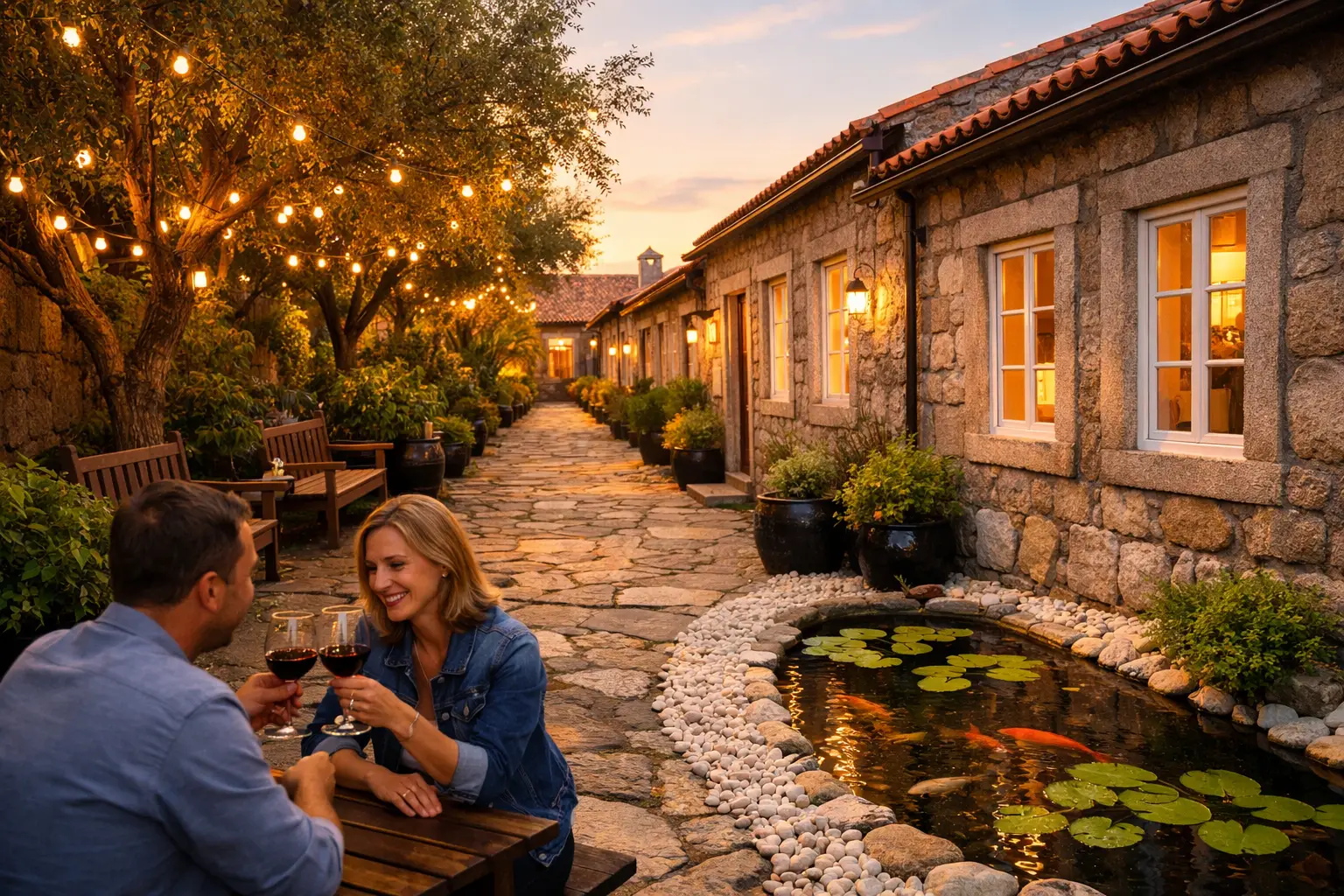
You hear the gate close behind you, and the city changes. The traffic softens. Someone is watering plants. A neighbor crosses the courtyard with groceries. That shift is the first clue to how to stay in an ilha well. You are not stepping into a themed stay or a polished hotel corridor. You are entering a lived-in piece of Porto, where daily routines still matter and where your comfort sits alongside everyone else’s.
For many travelers, the appeal is immediate. An ilha offers something a standard room rarely can - closeness to the city and a stronger sense of how people actually live. But that also means your stay works best when you treat the place as a neighborhood first and accommodation second. If you come looking for atmosphere, quiet detail, and a more grounded rhythm, an ilha can feel exactly right.
What an ilha stay actually feels like
In Porto, an ilha is traditionally a small courtyard community set behind the street, usually with a row of compact homes linked by a shared passage or common outdoor space. Historically working-class, these places were built for everyday life, not for spectacle. That history still matters.
When you stay in one, you’ll notice a different scale. Houses are smaller. Entrances are closer together. Outdoor areas are shared or visually shared, even when each home has its own privacy. The experience is intimate in the true sense of the word. You may hear a gate, footsteps on stone, or the low hum of neighborhood life. For some guests, that is the whole point. For others, especially if they expect full hotel anonymity, it can take a day to adjust.
That trade-off is worth being honest about. If you want character, old walls, and a sense of place, an ilha gives you plenty. If you want a lobby, a bar downstairs, and the feeling that nobody lives nearby, it may not be the right fit.
How to stay in an ilha comfortably
The first step is choosing the right kind of house for your trip. Not every traveler needs the same thing, and ilha accommodation tends to make those differences more obvious. Couples often do well in a smaller restored house where the charm is in the proportions - a compact kitchen, a sitting area, a bedroom tucked under an old roofline. Solo travelers may prefer the same, especially if they plan to spend most of the day walking through Bolhão, Bonfim, or down toward Ribeira. Small groups usually need to think more carefully about noise, bathroom sharing, and how much time they truly plan to spend at home.
Comfort in an ilha is usually less about square footage and more about layout, light, and practical details. Good heating or cooling matters. So does sound insulation, especially in heritage buildings. Clear arrival instructions matter too, because these places are often woven into residential streets rather than announced with a bright sign and reception desk.
If you are booking a restored house, look for signs that the host understands both heritage and operations. Thoughtful restoration should preserve what gives the place its soul without asking you to sacrifice the basics. You want old stone, traditional proportions, and original character. You also want a proper shower, reliable Wi-Fi, clean linens, and someone who answers practical questions without fuss.
Respect is part of the experience
A big part of how to stay in an ilha is understanding that you are sharing space with real life. Even in private holiday accommodation, the social setting is different from a hotel. Your neighbors may be other guests, long-term residents, or both. That changes the tone.
You do not need to be overly formal. But you should be considerate in the ordinary ways that make any close community work. Keep voices low in outdoor areas at night. Roll suitcases gently if you arrive early or late. If you smoke, only do so where it is clearly permitted. Treat gates, paths, and shared entry points as part of someone’s daily route home, not as holiday scenery.
This tends to improve the stay for everyone, including you. Ilha life is calm when guests settle into its rhythm. It becomes strained when people treat the courtyard like a private terrace or a social event space.
That is one reason intimate accommodation suits certain travelers better than others. If your idea of a good evening is taking a slow walk home, picking up pastries for breakfast, and reading in the courtyard for a while, you’ll probably feel at ease. If your plans depend on late-night noise and a lot of coming and going in groups, a more anonymous setup is kinder to everyone.
Why staying in an ilha changes your sense of Porto
A hotel can give you efficiency. An ilha can give you perspective. You begin to notice the city at a human scale. Morning light on tiled walls. Laundry lines above a narrow passage. The way Bonfim wakes up before the center fills. The bakery routine. The small negotiations of shared urban life.
This is not about romanticizing hardship or turning working-class history into décor. A good ilha stay should do the opposite. It should help you understand that preservation has value because neighborhoods are still lived in, not because they make a pretty backdrop for visitors.
That’s why restored places matter when they are handled with care. At Ruby Charm Houses, for example, the idea is not to isolate guests from the area but to host them responsibly within it. The best version of this kind of stay lets heritage remain visible while daily life continues around it.
Practical things to know before you book
Access is one of the first questions to ask. Some ilha houses are very walkable from central areas and public transport, but the final approach may involve a residential street, a gate, or uneven paving. If you are arriving with heavy luggage, mobility concerns, or a very late flight, clarity helps. A transfer or simple arrival support can make the first hour much easier.
It is also worth checking how self-contained the house is. Some guests want to cook simple meals and eat at home once or twice. Others only need coffee, a shower, and a quiet bed. Neither approach is better, but it affects what will feel convenient once you arrive.
Ask yourself how much interaction you want as well. Some travelers love having local recommendations and a host who can point them toward a good lunch in Campanhã or an easy walking route into the center. Others prefer independence. The best stays usually offer both - clear support when needed, and enough autonomy to let you feel at home.
Season matters more than people expect. In cooler months, old buildings can feel different from new apartments, even after careful restoration. In high summer, shaded courtyards and thick walls can be a gift, but ventilation still matters. Good hosts plan for this. Still, it helps to arrive with the right expectations.
How to stay in an ilha and feel at home quickly
The simplest answer is to slow down on the first day. Don’t rush to collect the whole city at once. Put your bag down. Open the window. Listen for a minute. Then walk the immediate area before making larger plans.
In this part of Porto, that first small walk often tells you more than any guide ever will. You start to understand where the nearest café is, which street rises faster than expected, where to buy fruit, how long it really takes to get to Bolhão on foot, and which corners feel best in the evening. A neighborhood becomes legible through repetition, not spectacle.
That is often the difference between simply sleeping in an ilha and actually staying in one. The second involves paying attention. You notice when to be quiet, when to ask for help, when to pause in the courtyard, and when to step back and let the place keep its own pace.
If that sounds modest, it is. But modesty is part of the appeal. The stay becomes richer because it is not overproduced. You are close to the center, yet slightly removed from its performance. You can walk to the market, to a long lunch, to the river, to Cedofeita, and return to a place that still feels residential when the day ends.
An ilha won’t suit everyone, and that’s fine. But if you want a stay with texture, history, and the quiet discipline of real neighborhood life, it offers something rare. Come with curiosity, choose comfort carefully, and leave enough room in your schedule to notice where you are. The place will do the rest.