
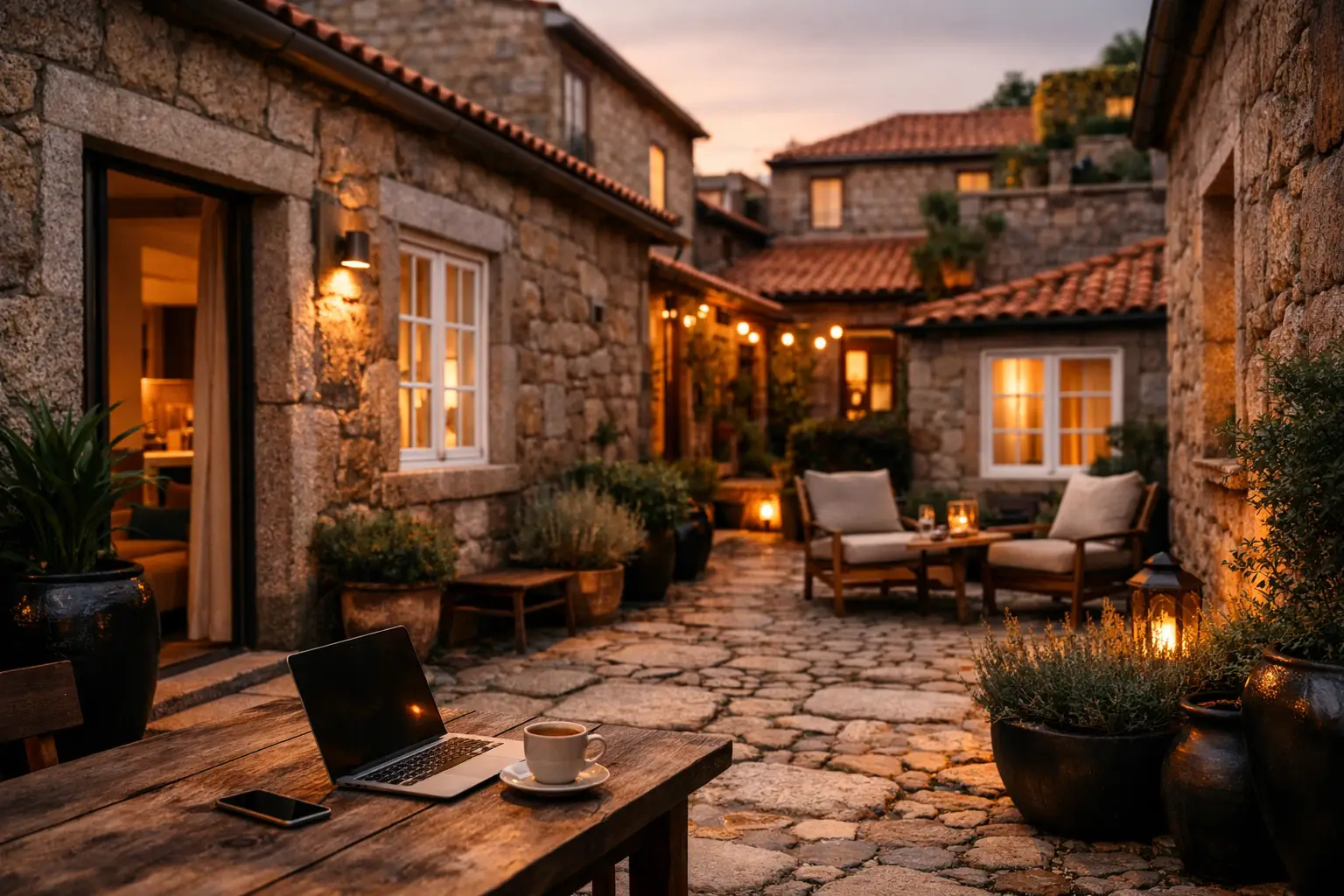
You can usually tell within five minutes whether a Porto stay will suit the trip you actually want. If you're searching for how to book holiday homes Porto travelers remember for the right reasons, the decision is less about chasing a pretty listing and more about reading the place behind the photos. In this city, that matters. A home near a busy avenue feels different from one inside a quiet courtyard. A restored house in a lived-in neighborhood feels different from a polished apartment block built for short stays.
That is why booking well starts before payment. It starts with knowing what kind of Porto you want to wake up inside.
How to book holiday homes Porto travelers truly enjoy
A lot of people begin with price and photos. Both matter, of course, but neither tells the full story. A wide-angle lens can make a compact room look generous, and a low nightly rate can hide extra cleaning fees, strict check-in windows, or a location that adds taxi costs every day.
A better starting point is purpose. Are you coming for long walks, markets, architecture, and slow dinners? Are you traveling as a couple who wants privacy, or as a small group that needs separate sleeping space? Do you want to stay somewhere that feels residential and calm at night, or do you prefer to be in the middle of the busiest streets?
Porto rewards visitors who choose by rhythm, not just by map. The city center is walkable, but its neighborhoods have different moods. Around Bolhao and Cedofeita, your days can begin quickly. In Bonfim and toward Campanha, you may feel more of the city's everyday pace, with morning bakeries, local errands, and quieter side streets. Ribeira is beautiful, but it is not the same kind of stay as a small house in a traditional residential setting.
Start with the kind of home, not just the date
When people search holiday homes, they often group very different accommodations under one label. In practice, there is a big difference between an investor-owned apartment, a serviced unit with no sense of place, and a restored house that still belongs to a neighborhood with real daily life around it.
That difference affects your trip. A heritage home may have original proportions, older stone walls, or a layout shaped by the history of the building rather than by hotel logic. That can be part of the charm, but it should also be explained clearly. Good hosts do not hide those details. They help you understand what the house offers and who it suits.
Before you book, ask yourself a few plain questions. Do you want a full kitchen or just coffee and a fridge? Is outdoor space important? Will stairs be an issue? Do you need reliable Wi-Fi for some work between museum visits and long lunches? If you are staying in a restored historic property, is modern comfort balanced well with character?
The right home is rarely the most generic one. It is the one whose layout, atmosphere, and practical details match the trip you are actually taking.
Read the listing for signs of care
A trustworthy listing feels specific. It tells you what floor the home is on, how check-in works, whether the bathroom is compact, whether the street is lively, and what the sleeping arrangement really means. It does not rely on vague promises.
Look closely at the tone, too. Hosts who care about hospitality usually write with clarity rather than hype. They explain house rules without sounding hostile. They describe the neighborhood with respect. They make it clear whether you are booking a self-contained home, a room, or a unit within a small property.
Photos should support the text, not replace it. If you cannot understand the flow of the home from the images, that is worth pausing on. The same goes for missing details about arrival, luggage access, or late check-in.
Location in Porto: close enough is better than central at any cost
Visitors often overpay to be as central as possible, then realize they spend the trip surrounded by noise, traffic, or crowds. In Porto, a stay that is slightly outside the busiest core can be a better fit, especially if you enjoy walking and want your evenings to feel calmer.
Bonfim is a good example of this balance. It is well placed for reaching the center on foot or by transit, but parts of it still feel residential in the best sense. You notice ordinary life. Laundry on a line. Someone carrying bread home. A courtyard quieting down in the late afternoon. That atmosphere can give a short visit more depth than a postcard view ever will.
Still, location always depends on how you travel. If you plan to return to your accommodation several times a day, centrality may matter more. If you are staying for a few nights and like to move through the city on foot, a neighborhood just beyond the busiest tourist streets often gives you more space and a more grounded experience.
Check walking routes, not just map pins
A listing can look central on a map and still feel inconvenient. Porto has hills, uneven sidewalks, and streets that change character quickly from one block to the next. Check whether the route home at night feels straightforward. See how close you are to metro stations, groceries, cafes, and the places you'll actually spend time.
It is also worth checking whether your host gives real neighborhood guidance. Not a generic list of landmarks, but useful orientation. Where to grab breakfast nearby. Which streets are quiet. How to reach Campanha station or Bolhao without fuss. That kind of detail usually comes from people who know the area well.
Policies matter more than travelers think
Many booking regrets have little to do with the house itself. They come from not reading the terms. Cancellation rules, damage deposits, tourist taxes, check-in timing, and occupancy limits all shape the experience.
This matters even more with smaller heritage properties. A host managing a handful of houses inside a shared residential context has to balance hospitality with respect for neighbors and the physical limits of older buildings. Quiet hours, visitor rules, and clear arrival procedures are not red tape for the sake of it. They often protect the quality of the stay for everyone.
Read the policies before you fall in love with the photos. If your flight lands late, check whether late arrival is possible. If you are traveling with a lot of luggage, ask about access and storage. If you want flexibility, see whether direct booking offers better terms than third-party platforms.
Sometimes the best booking choice is not the cheapest or the most flexible on paper. It is the one with the clearest expectations.
When to book holiday homes in Porto
Porto has busy periods when good small-scale accommodation gets reserved earlier than people expect. Spring and early fall tend to attract travelers who want mild weather and long walking days, while summer can bring more demand across the city.
If you are set on a particular type of stay, especially a small heritage house with limited capacity, booking early gives you more choice. Waiting can still work in quieter periods, but last-minute booking narrows your options fast if you care about neighborhood feel, design quality, or outdoor space.
There is a trade-off here. Booking early secures the place you want, but it may come with stricter cancellation terms. Booking later may bring occasional deals, though often at the cost of location or quality. If your flights are fixed and the accommodation matters to the trip, earlier is usually the calmer option.
Direct booking or platform booking?
Both can work. Platforms are familiar and easy for comparing options, especially in the research stage. But direct booking can offer more clarity, better communication, and occasional extras that are harder to include through third-party systems.
For a place with a strong sense of hospitality, direct contact can be useful before you commit. You can ask whether a certain house suits a couple or a solo traveler, whether airport transfer is available, or whether there are practical services that make arrival easier. You also get a better feel for how the property is run.
If you do book direct, make sure the website is professional, the terms are clear, and the payment process feels secure. A good host should make booking feel personal, not improvised.
One Porto example of this more thoughtful model is Ruby Charm Houses, where the stay is framed not as anonymous lodging but as time spent within a restored ilha community that still respects the life around it. That kind of context can make a real difference if you want your accommodation to feel rooted rather than generic.
The questions worth asking before you confirm
You do not need to interrogate a host. But a few smart questions can save a lot of friction later. Ask what the immediate surroundings are like at night. Ask whether the house is suitable if you are sensitive to stairs or street sound. Ask what is included, from housekeeping to toiletries to coffee basics. Ask how arrival works in real terms, not just the official check-in hour.
The host's answer tells you almost as much as the facts themselves. Clear, warm replies usually signal an organized stay. Evasive or overly polished responses can be a warning sign.
A good holiday home booking should leave you with a clear picture. You should know where you are sleeping, how the area feels, what the rules are, and who to contact if something goes wrong. That level of confidence is not boring. It is what gives you the freedom to enjoy the city once you arrive.
Choose the home that helps you settle into Porto's real cadence - morning coffee, steep streets, tiled facades catching late light, neighbors heading home - and the trip tends to take care of itself.