
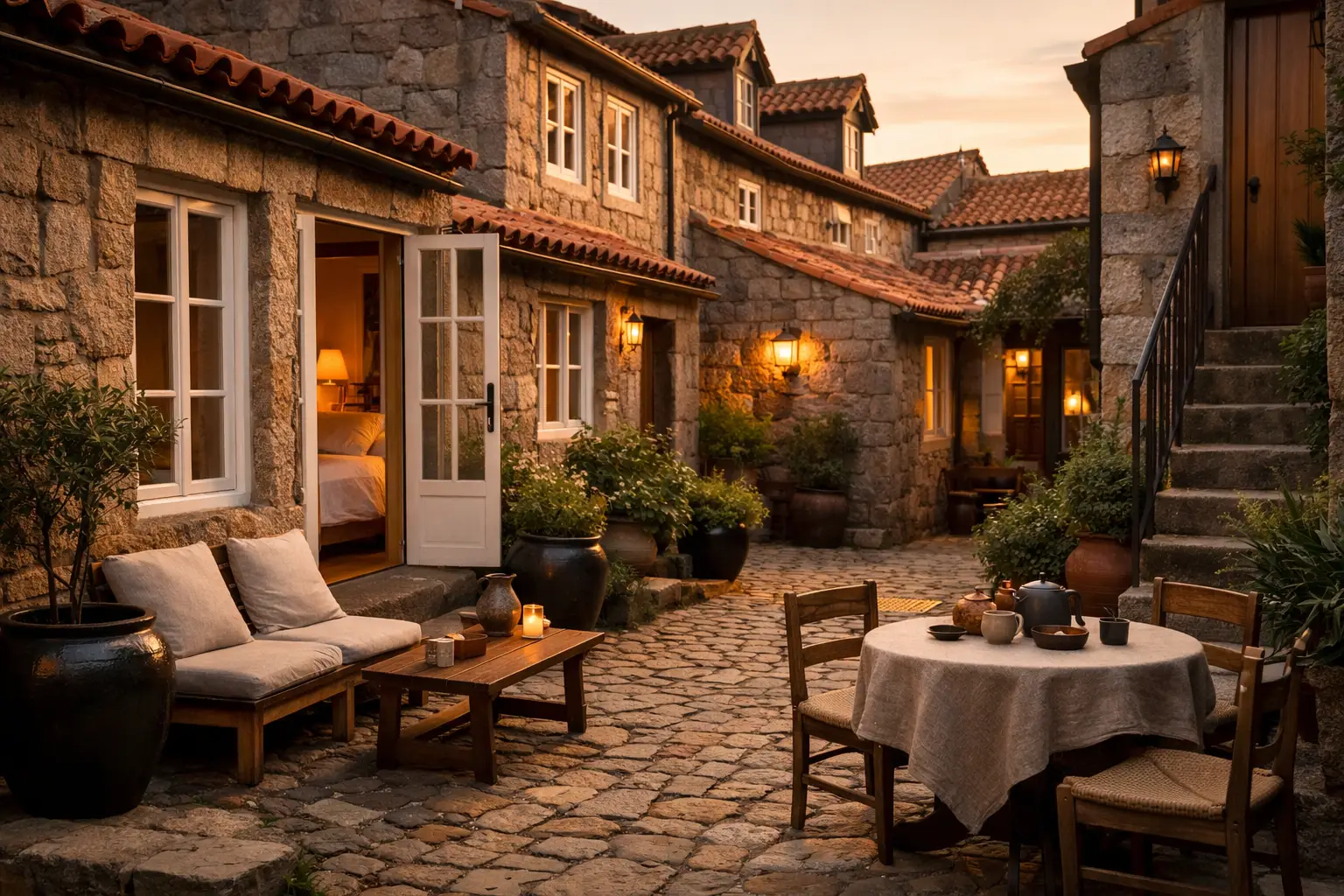
You can tell a lot about a stay from the first sound you hear in the morning. In some places, it is elevator doors and buffet plates. In others, it is a gate opening, footsteps in a courtyard, a neighbor heading out for bread, and swallows cutting across the light. That is the promise of heritage accommodation in Porto when it is done with care. Not nostalgia staged for visitors, but a real sense of place that lets you settle into the city instead of skimming across its surface.
What heritage accommodation in Porto really means
The phrase gets used loosely. Sometimes it means old tiles in a lobby and a few restored moldings behind a reception desk. Sometimes it means a grand building with history, but little connection to the street outside. Those places may still be comfortable, even beautiful. But heritage, on its own, is not the same as atmosphere, and atmosphere is not the same as lived reality.
In Porto, the most meaningful heritage stays tend to preserve more than architecture. They hold onto scale, routine, and neighborhood texture. You feel it in narrow passages, stone thresholds, iron gates, old carpentry, the rhythm of row houses, and the quiet practicality of spaces made for everyday life. The city has always mixed beauty with use. Laundry lines and carved granite belong to the same story.
That matters because Porto is not a museum. It is a working city with school runs, corner cafes, repair shops, church bells, train lines, and steep streets that shape the day. A heritage stay should not isolate you from that. It should give you a respectful way to be inside it.
Why some historic stays feel richer than others
A restored townhouse on a polished central street can be lovely. So can an apartment behind a nineteenth-century facade. But there is a difference between sleeping in an old building and staying somewhere that still carries the social shape of the city.
This is where Porto's traditional ilhas come into the conversation. An ilha is not a concept invented for tourism. It is a type of working-class courtyard community, usually tucked behind the street front, where small houses line a shared passage or patio. They were built for ordinary families and everyday living. Their scale is intimate. Their architecture is modest. Their value is not in grandeur, but in memory, continuity, and the way they reveal how Porto was lived.
When an ilha is restored carefully, the result can be a very particular kind of heritage accommodation in Porto. You get privacy and comfort, yes, but also proportion. Doors open onto shared outdoor space. Houses sit close enough to suggest community without denying personal space. You notice the texture of daily life more clearly. It feels grounded.
That said, this style of stay is not for everyone. If you want a lobby, room service, and the anonymity of a larger hotel, a heritage house in a neighborhood setting may feel too personal. If what you want is a sense of place, that closeness is usually the point.
The value of staying in a living neighborhood
Many travelers say they want authenticity. What they often mean is something quieter and more specific. They want to buy fruit where residents buy fruit. They want to walk to Bolhao in the morning, stop for coffee without planning it, and return at night through streets that still belong to the people who live there. They want to feel oriented, not managed.
A good neighborhood stay offers exactly that. In Bonfim and nearby eastern parts of the city, you are close enough to reach the center easily, but not so smoothed out that every corner feels designed for visitors. You get the benefit of access without losing the ordinary city around you. That balance matters.
You will notice it in small ways. The bakery is busy early. The corner restaurant does not need to explain itself. The walk into the center is part of the day, not dead time between destinations. Porto reveals itself well on foot, especially from east to west - through Bonfim, toward Bolhao, down into the older core, and back again by a different street when the light changes.
Comfort matters too
There is a stale idea that heritage stays require compromise. Charm instead of sleep. Old walls instead of proper bathrooms. Character instead of practical comfort. That trade-off used to be common. It does not need to be anymore.
The most thoughtful heritage homes in Porto understand that comfort is what allows you to appreciate character in the first place. Good beds, working kitchens, reliable heating and cooling, sound insulation where possible, strong cleaning standards, and clear arrival information are not extras. They are the difference between a meaningful stay and an inconvenient one.
This is especially true in restored small-scale houses. Old buildings come with quirks. Stairs may be steeper. Layouts may follow historic logic rather than hotel logic. Windows may frame a courtyard instead of a dramatic view. None of that is a problem if the essentials are handled properly and the expectations are honest.
That honesty is part of good hosting. Heritage should never be used to excuse poor maintenance or vague service. If a place asks guests to appreciate history, it should do the work of making history comfortable to live with.
Heritage without performance
There is another difference worth paying attention to. Some historic accommodations present the city as a backdrop. Others treat it as a living context. You can feel the gap immediately.
The weaker version relies on decoration. A few vintage objects, local references on the walls, maybe an old photograph enlarged for effect. The stronger version begins with the building itself and the neighborhood around it. It does not need to perform Porto loudly, because Porto is already there in the stone, the scale, the courtyard, the route home from the metro, the sound of dishes from nearby kitchens.
That approach tends to feel more respectful as well. Real heritage is not a theme. It involves restoration decisions, maintenance, neighbor relationships, and limits. It asks what should be preserved, what can be adapted, and how guests can be welcomed without turning a residential place into a stage set.
For travelers who care about responsible tourism, this is often the deciding factor. You are not simply renting charm. You are choosing whether your stay supports a more careful model of hospitality.
Who heritage accommodation in Porto suits best
It suits travelers who like cities at street level. Couples who want a place with memory and warmth. Solo visitors who prefer a small house to a corridor of numbered doors. Friends traveling together who care more about a shared table and a neighborhood rhythm than a rooftop scene.
It also suits people who do not mind a little texture in their travel. Not inconvenience, but texture. A cobbled lane. A gate to open. The sense that your accommodation has a relationship with the area around it. If you need everything standardized and predictable, a conventional hotel may simply fit better.
There is no moral hierarchy in that. It is just a matter of what kind of trip you want. Heritage stays reward attention. If you enjoy noticing how a city is made, they give more back.
What to look for before you book
Photos matter, but they do not tell the whole story. Look for signs that the property explains its setting clearly. Is it a restored house, an apartment, or part of a courtyard community? Does it mention the neighborhood in practical terms, not just marketing language? Are comfort details as visible as design details?
It also helps to look for signs of stewardship. You can often tell when a place has been restored with respect rather than simply styled for short stays. The language is usually calmer. It talks about the building, the area, and the guest experience with equal weight. It does not flatten local life into scenery.
If services such as transfers, local guidance, luggage help, or simple arrival support are available, that can make a heritage stay far easier, especially if you are arriving late or planning to explore the city mostly on foot. Convenience is not the enemy of authenticity. Done well, it gives you more time to actually enjoy where you are.
One good example of this model is Ruby Charm Houses, where restored homes inside a traditional ilha offer a rare balance: privacy, practical comfort, and the feeling that you are staying in a real piece of Porto rather than beside one.
A better way to remember the city
Years later, most people do not remember a trip through amenities alone. They remember how the place felt when they came back in the evening. The sound of rain in a courtyard. The bakery they learned by habit. The way the house held the cool air after a walk uphill. The route from Ribeira back toward Bonfim when the city began to quiet down.
That is what heritage accommodation can do at its best. It gives your time in Porto a setting with roots. Not polished emptiness. Not borrowed character. Just a place with history still under its feet, ready to be lived in for a few days with care.
If that sounds like the kind of trip you want, choose the stay that lets you hear the neighborhood wake up.