
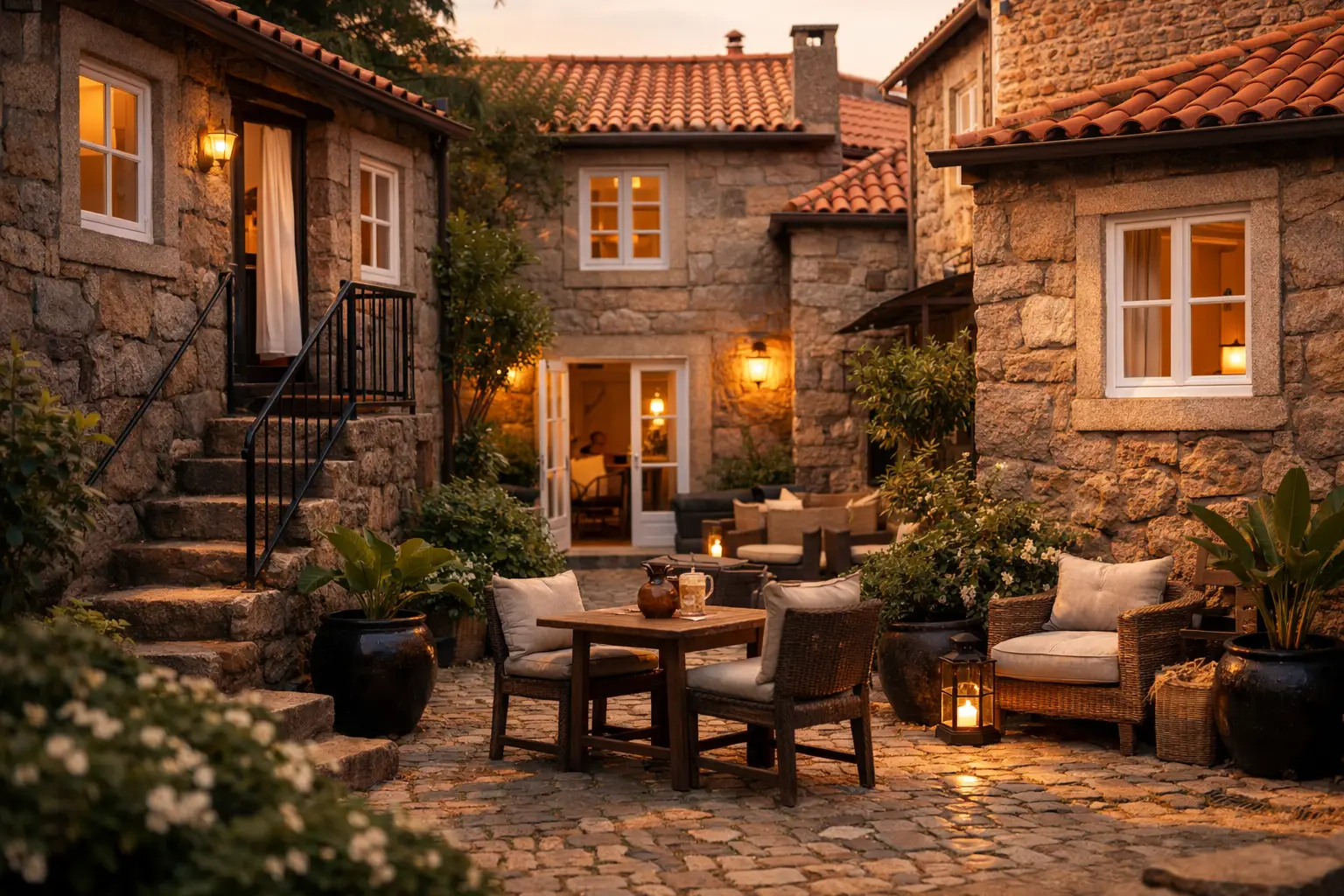
Some places in Porto are beautiful on arrival and forgettable by checkout. Others stay with you because they changed the pace of your trip. That is usually what people are really looking for when they search for porto holiday homes with character - not just patterned tiles or an old wooden door, but a place that feels rooted, cared for, and lived in.
Character is an overused word in travel. It gets attached to anything older than a decade or anything painted in warm light. But in a city like Porto, character is not decoration. It comes from the shape of the street, the echo of footsteps in a courtyard, the way laundry lines still belong to daily life, and the fact that some neighborhoods were built for working people and still carry that memory in their walls.
If you want your stay to feel connected to the city rather than staged for it, it helps to know what kind of character actually matters.
What gives Porto holiday homes with character their appeal
The first thing is scale. A small house feels different from a hotel floor. You notice when you have your own front door, your own kitchen table, and a quieter rhythm around you. That sense of privacy matters, especially for couples and solo travelers who want to explore all day and come back somewhere calm.
The second thing is the building itself. In Porto, the homes with the most depth are often the ones that keep traces of what they were. Old stone, timber, narrow proportions, shutters, a staircase that reminds you this city was not designed in a hurry. Good restoration does not sand these things away. It makes them work for modern stays without erasing their texture.
The third thing is the neighborhood. A home can be lovely inside, but if it sits in a street with no local rhythm, no morning bakery run, no familiar sound of residents coming and going, something is missing. The strongest stays in Porto place you inside a real part of the city, where everyday life continues around you and your role is to join it respectfully.
Character is not the same as inconvenience
This matters more than many booking pages admit. Travelers who choose heritage stays are often happy with a few quirks, but very few want discomfort disguised as authenticity.
A house with character should still let you sleep well, shower properly, store your bags, and make coffee without a puzzle. If the mattress is poor, the bathroom awkward, or the layout impractical, the historic charm fades quickly. The best holiday homes understand that comfort is not the enemy of atmosphere. It is what allows you to enjoy it.
There is always a balance to strike. An original staircase may be beautiful, but it may also make a property less suited to guests with limited mobility. A courtyard setting may feel peaceful, but not if sound carries late at night. Honest hosts explain these trade-offs clearly. That kind of transparency builds trust before you arrive.
Why an ilha offers a different kind of stay
One of the most distinctive settings in Porto is the ilha - a traditional courtyard community of small row houses set behind the main street. These spaces were built for workers, families, and close daily life. They were practical places, not romantic inventions, and that history is exactly why they still feel so specific.
Staying in an ilha is different from renting an apartment in a renovated downtown block. You step away from the traffic and into a shared passage, a quieter enclosed world with its own pace. You notice doors facing one another, plants by the entrance, the small rituals of coming home. It feels residential because it is.
That said, not every restored historic setting is handled with the same care. The question is not only whether a place looks authentic, but whether its renewal respected the life already there. The most meaningful projects preserve architecture and neighborhood continuity at the same time. In places like Ilha Cardoso, that means hospitality exists alongside a living residential community, not on top of it.
How to tell if a holiday home has real character
Photos help, but they do not tell the whole story. Anyone can style a room with linen curtains and vintage chairs. What you want to look for is evidence of thought.
Read how the host describes the property. Do they talk about the building, the street, and how the home functions in real terms? Or do they lean on vague adjectives? Trust specifics. A good host tells you what has been restored, what has been kept, how many people the house suits, and what kind of stay it supports.
Pay attention to location language too. If the listing only talks about attractions and not the neighborhood itself, that can be a clue. Strong local accommodation usually has a sense of place. You will read about nearby markets, walking routes, transit links, or the daily rhythm of the area. The home has an address, not just a selling point.
Reviews can also reveal the difference between visual charm and lasting comfort. Guests tend to mention the same things when a stay works: quiet nights, easy communication, a kitchen they actually used, thoughtful details, and a feeling of being at home in the city rather than parked beside it.
The neighborhoods that suit this kind of trip
If you are looking for Porto holiday homes with character, the eastern side of the city often makes more sense than polished central strips built around foot traffic alone. Bonfim and Campanhã, in particular, offer the kind of texture many travelers hope to find but struggle to name.
Bonfim has that mix of residential life, independent cafés, older commerce, and walkable access that makes a stay feel grounded. You can head toward Bolhão, keep walking into the historic center, or return to a quieter street at the end of the day. It works well if you like cities on foot and want your mornings to begin in a real neighborhood.
Campanhã has a different energy. It is less performative, more practical, and increasingly interesting for travelers who care about how a city actually breathes beyond postcard routes. Depending on the exact address, you may trade some immediate centrality for more space, easier arrivals, and a stronger sense of everyday Porto.
This is where expectations matter. If your ideal trip means stepping straight into crowded landmark zones, a small heritage house in a residential quarter may feel too calm. If you prefer returning to somewhere with a front gate, familiar corners, and a sense of retreat, it may feel just right.
What thoughtful hosting adds to the experience
A memorable stay is rarely about architecture alone. Hosting matters just as much. In smaller holiday homes, especially heritage properties, the best hosts act less like salespeople and more like careful stewards. They help you understand the space, the neighborhood, and the unwritten etiquette of staying in a residential setting.
That can mean practical guidance on arrivals, laundry, luggage, transfers, and how to move across the city without friction. It can also mean softer things: where to buy fruit in the morning, when a street is liveliest, which route back feels nicest after dinner. None of this needs to be theatrical to be generous.
You will notice the difference when a place is run by people who care about both guests and neighbors. Houses are better maintained. Rules are clearer. The atmosphere feels settled. Respect is part of the hospitality, not an afterthought.
At Ruby Charm Houses, that idea is central. The experience is not built around pretending you are separate from Porto, but around giving you a comfortable way to belong to a small part of it for a few days.
Choosing the right kind of character for your trip
Not every traveler wants the same thing, and that is worth saying plainly. Some people want ornate interiors and dramatic views. Others want quiet design, local texture, and a home that supports long walks, late lunches, and unhurried evenings. Both are valid, but they are not the same trip.
For many visitors, the most rewarding holiday homes in Porto are the ones that feel modest in the right ways. Not plain, never generic, but honest. A place where old materials still speak, where comfort has been considered, and where the city outside the door is still a lived-in one.
That is usually what makes a stay memorable months later. Not a lobby scent or a rooftop photo, but the click of the gate in the evening, the coolness of stone underfoot, the bread shop on the corner, and the sense that for a little while, you had a real address in Porto.
When you choose a home with character, choose one that has earned it.