
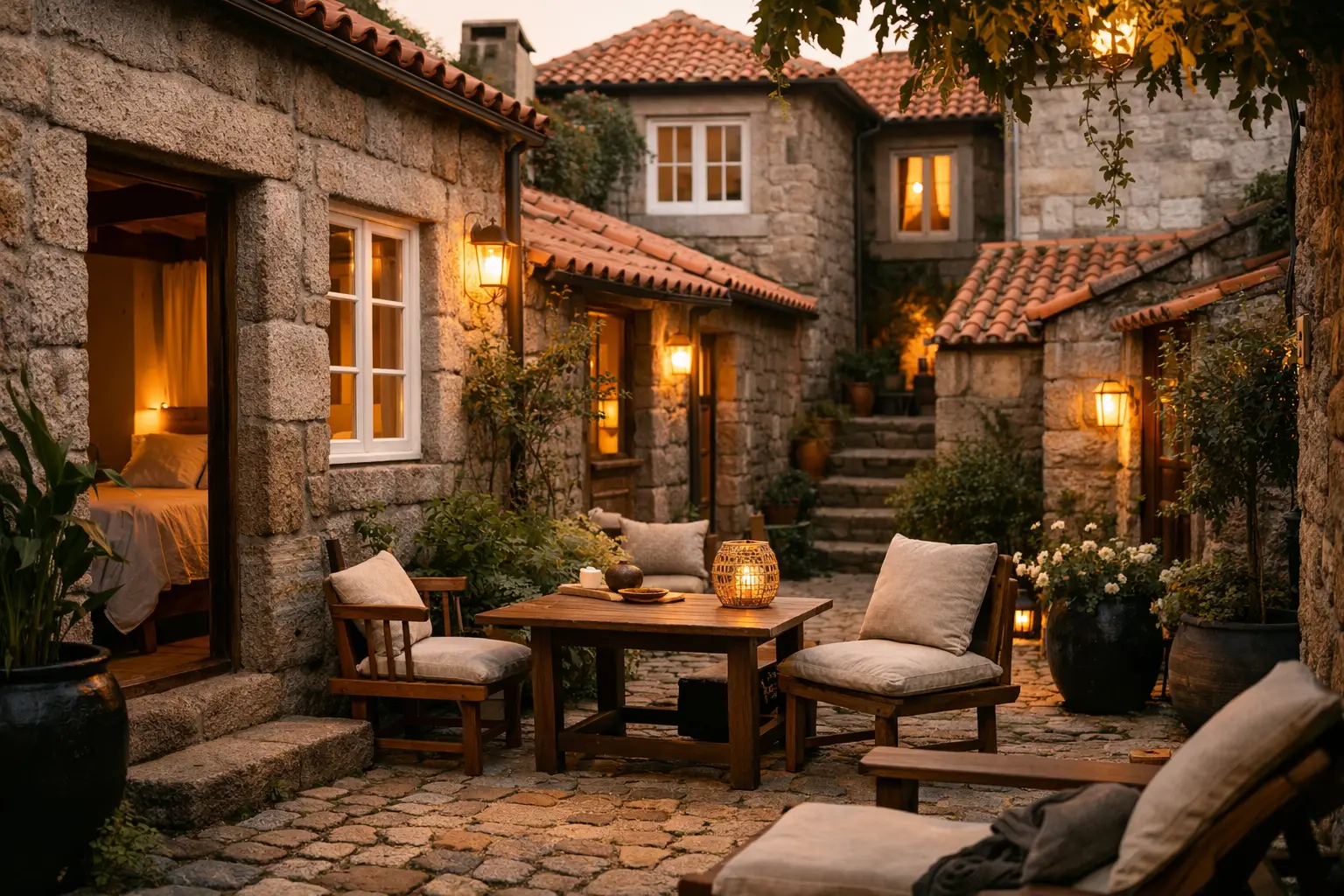
You can tell a lot about a place by what you hear when you wake up. In some stays, it is elevator doors and hallway traffic. In authentic Porto accommodation, it might be a gate opening, footsteps in the courtyard, a neighbor greeting someone on the way to work, or the soft clink of breakfast dishes from a real home nearby. That difference matters. It changes how the city enters your trip.
What authentic Porto accommodation really means
In Porto, authenticity is not about roughing it, and it is not about sleeping in a room filled with vintage props chosen to look old on purpose. It is about staying somewhere with a real relationship to the city. A place shaped by local architecture, daily routines, and the kind of streets people still use for ordinary life.
That often means looking beyond the standard hotel formula. Hotels do some things very well - front desks, consistency, late-night check-in, easy anonymity. But they can also place you in a version of Porto that feels detached from the one residents know. If your priority is to feel the texture of the city, the trade-off is worth considering.
Authentic Porto accommodation usually has three things in common. First, it belongs to the urban fabric of the city rather than floating above it. Second, it keeps some honest trace of the building's past. Third, it gives you comfort without erasing character. You want good water pressure and a decent mattress, of course. You also want to notice the stone, the proportions, the courtyard, the stairs, the way the light lands at the end of the day.
Why neighborhood stays feel different
A city reveals itself through repetition. The same bakery opening shutters in the morning. Laundry lines moving slightly in the afternoon air. Someone taking groceries home at dusk. When you stay in a residential part of Porto, those small patterns become part of your own day.
That is one reason neighborhood-based lodging tends to feel richer than accommodation built around tourist flow alone. You are not stepping in and out of a sealed travel bubble. You are walking into streets with their own rhythm. You buy fruit from the corner shop because it is there, not because it was recommended in a roundup. You learn which route you prefer back from Bolhao. You start recognizing corners in Bonfim or the quieter stretches near Campanha, not as attractions but as part of your temporary routine.
It also changes your pace. Porto is a city best understood on foot, with time to notice tiled facades, cafes filling slowly, and the steep shifts between one street and the next. Staying in a real neighborhood gives you a base that supports that slower way of moving. You are not consuming the city in blocks. You are living inside it for a few days.
Authentic Porto accommodation in historic homes
The strongest stays in Porto are often the ones that respect what was already there. Not every old building makes good accommodation, and not every renovation deserves praise. Some places strip out the soul and leave only a stylish shell. Others preserve the bones so carefully that guests end up sacrificing comfort. The right balance sits somewhere in the middle.
A restored historic home should still feel like a home. You should notice original materials, traditional layouts, and details that belong to Porto rather than to a global rental aesthetic. At the same time, the practical side needs to work. Clean bathrooms, sound sleep, reliable heating or cooling, simple check-in, and clear communication are not extras. They are part of being welcomed well.
This is especially true in traditional ilha communities. An ilha is not a hotel concept. It is a form of working-class housing with deep roots in Porto's social history - small houses organized around a shared passage or courtyard, built for everyday urban life. Staying in one, if it has been restored with care, can offer something rare: a direct sense of how architecture and community once met, and in some places still do.
That kind of stay asks for respect from both sides. Guests get closeness, atmosphere, and a feeling of belonging. In return, the place should not be treated like a stage set. The value lies precisely in the fact that it is still connected to real life.
How to tell if a place is genuinely local
Photos can be misleading. So can words like charming, boutique, or unique. If you are trying to choose authentic Porto accommodation, it helps to read for substance.
Start with the building itself. Is there a clear story about what the property was before? Does the description explain the neighborhood in a grounded way, or does it flatten everything into postcard language? The most trustworthy hosts tend to be specific. They tell you what kind of street you are on, what kind of house you are entering, and what kind of experience it suits.
Then look at the tone around comfort. A good host does not pretend an old building behaves like a new tower block. There may be stairs, compact layouts, or the occasional sound of life around you. Honest hospitality means being clear about those things while also making sure the essentials are handled properly.
The final clue is whether the stay seems to have a relationship with its surroundings. Some accommodations are physically in Porto but emotionally nowhere. Others are deeply rooted - not only in design, but in the way they welcome guests, recommend nearby places, and set expectations around being part of a neighborhood.
Comfort matters too - authenticity is not inconvenience
There is a tired idea in travel that real places must be slightly uncomfortable to count as real. That is nonsense. Good accommodation should let you rest properly. If the mattress is poor, the shower weak, or the check-in confusing, you are not having a more authentic experience. You are just tired.
What matters is the kind of comfort on offer. Thoughtful, local hospitality often feels quieter than hotel luxury language. It is less about abundance and more about care. A well-kept room. Useful guidance. Privacy when you want it. Help when you need it. Spaces scaled for actual living rather than display.
For many travelers, this is exactly the sweet spot. You want beauty, but not performance. You want convenience, but not standardization. You want a place that feels personal without becoming intrusive. That balance is harder to achieve than it looks, which is why small, heritage-led stays often leave a stronger impression than larger operations.
The part of Porto you remember later
People often remember cities through interiors as much as landmarks. The cool floor under bare feet in the morning. The window you opened before going out. The courtyard you crossed at night after dinner. These details stay with you because they are where travel becomes lived experience.
In Porto, that memory is often tied to scale. Smaller houses, older walls, neighborhood sounds, and streets where daily life continues around you create a different kind of closeness. You feel less like a spectator. More like a temporary participant.
That does not mean every traveler wants the same thing. If you need a gym, a lobby bar, and twenty-four-hour staffing, a hotel may suit you better. If you want to understand the city from the inside out, a heritage home in a lived-in neighborhood will likely give you more.
Places like Ruby Charm Houses make that choice feel tangible. Not because they promise a fantasy version of Porto, but because they offer something steadier - restored homes inside a traditional ilha, with privacy, comfort, and the everyday presence of a real community around them.
Choosing the right stay for your trip
The best question is not, "What is the most authentic place?" It is, "What kind of closeness to the city do I want?" Some travelers want to step out into busy central streets and be surrounded by movement. Others prefer a slightly calmer base with easy access to the center and a stronger neighborhood feel.
Porto gives you both, sometimes within a short walk. From the riverfront to Bolhao, from Cedofeita to Bonfim, the city shifts quickly. That is part of its appeal. Your accommodation shapes which version of Porto you meet first each morning and return to each night.
So choose somewhere that lets the city remain itself. A place with history still visible, comfort honestly provided, and neighbors treated with respect. That is usually where the trip starts to feel less like a visit and more like a stay.