
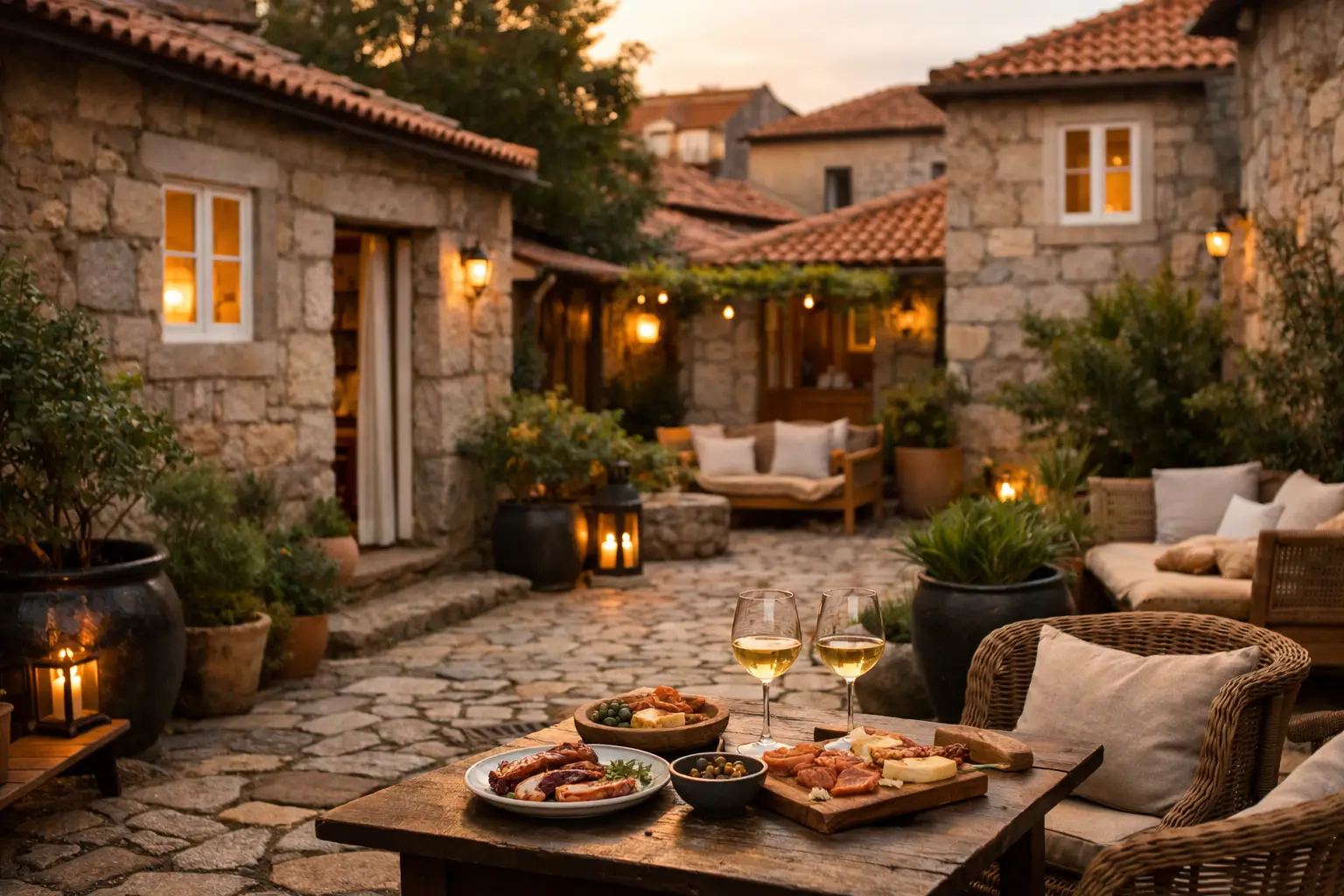
Porto tells you how to eat by the sound of the street. In one block you get the rattle of espresso cups, in the next the smell of charcoal, then a bakery window fogged up with warm bread. If you're looking for the best food neighbourhoods in Porto, it helps to think less about famous addresses and more about daily rhythms. The city eats differently from morning to night, and each neighborhood has its own pace.
What matters here is not only where the food is good. It is where eating still feels tied to ordinary life - market errands, lunch breaks, late pastries, Sunday roast chicken, a quick beer with something salty on the side. Some areas are better for long lunches, some for grazing, some for that hour when you want a proper meal without feeling like you've walked onto a stage set.
Best food neighbourhoods in Porto for eating like you're staying here
If you want one neat answer, there isn't one. Porto's food life is spread across neighborhoods that each do a different job. Ribeira gives you atmosphere and river views, but not always the strongest everyday food culture. The places that feed the city more honestly tend to sit a little uphill, a little east, or just outside the postcard frame.
That is why Bolhão, Bonfim, Cedofeita, and parts of Campanhã matter so much. They give you variety, routine, and the chance to eat well without overplanning. You can start with coffee and a pastry, drift into a market lunch, stop for tinned fish or petiscos in the afternoon, and end with a full dinner that still feels local to the block.
Bolhão and Baixa
Bolhão is one of the easiest places to understand Porto through food. Not because everything here is old, but because the neighborhood still moves around buying, carrying, frying, baking, and serving. Around the market, you'll notice a mix of produce stalls, traditional snack counters, bakeries, newer small restaurants, and long-standing spots where lunch is still the main event.
This is a good area for first-day eating. You can try many things without committing to a formal evening out. A coffee at the counter makes sense here. So does caldo verde, a plate of rice and grilled fish, or a simple sandwich done properly. The pleasure of Bolhão is that it suits curiosity. If you like to walk a few streets and decide by smell and mood, this neighborhood rewards that.
Baixa, just around it, has more traffic from visitors, and that changes the equation. There are very good places to eat in Baixa, but the quality range is wider. One street can feel thoughtful and grounded, the next can feel hurried. If you stay alert to menus that reflect the season, lunch specials written for regulars, and rooms where people are actually eating full meals rather than just taking photos, you can eat very well.
Come here in the morning or at lunch if you want the neighborhood at its most natural. Evenings can still be enjoyable, but daytime shows you how the district really feeds people.
What to eat around Bolhão
This is a strong area for pastries, market-led lunches, roast meats, cod dishes, and soups. It is also one of the easiest places to find a satisfying meal that does not need a special occasion. If you want to understand Porto's comfort food, start here and keep it simple.
Bonfim
Bonfim has become one of the city's most interesting places to eat because it still feels residential while offering real range. You can have a very polished dinner here and, five minutes later, pass a corner café where neighbors are ordering the same snacks they have ordered for years. That mix gives the neighborhood its balance.
Food in Bonfim often feels more personal than performative. You get small dining rooms, careful cooking, bakeries with loyal followings, and cafes that work at different hours of the day. It is a neighborhood that suits travelers who like walking without fixed plans. You might set out for breakfast and end up staying through lunch.
There is also a practical side to Bonfim. It sits well for moving between the east side and the center, so eating here rarely requires a dedicated expedition. For guests staying in or near Ilha Cardoso, this is the kind of area that becomes part of your routine rather than a one-time destination.
Bonfim is especially strong if you like contemporary cooking that still respects local ingredients and habits. The trade-off is that some of the most talked-about places can be small and busy. It is wise to stay flexible. A full dining room in Bonfim is rarely a bad sign.
Why Bonfim belongs among the best food neighbourhoods in Porto
Bonfim works because it has not lost the feeling of being lived in. Breakfast, lunch, and dinner all make sense here. You can eat lightly or settle in. You can find traditional flavors, but also chefs doing newer things without pretending they invented the city. That balance is harder to achieve than it looks.
Cedofeita
Cedofeita is often the answer for travelers who want food with variety and a slightly slower social pace. The streets here hold wine bars, vegetarian kitchens, bakeries, natural wine spots, old-school taverns, and restaurants that treat dinner as something to linger over. It is one of the city's most reliable neighborhoods for an evening that stretches gently.
What makes Cedofeita useful is breadth. Not everyone wants the same meal every day, especially on a city break. If one person wants traditional Portuguese cooking and another wants something lighter or more modern, Cedofeita usually gives you options within walking distance. That makes it an easy neighborhood for couples or small groups with different appetites.
The caveat is that Cedofeita can sometimes feel more curated than rough-edged. That is not necessarily a criticism. Some travelers want exactly that - thoughtful spaces, good music, well-edited menus. But if you are chasing the most everyday version of Porto, Bonfim or Bolhão may feel more grounded. Cedofeita shines when you want choice and a relaxed dinner atmosphere.
Campanhã
Campanhã is still overlooked by visitors who stay close to the river and never quite make it east. That is a mistake, especially if you care about neighborhoods where food remains part of daily life rather than a standalone attraction. This is not the district for flashy restaurant hopping. It is better for straightforward meals, bakeries, grills, family-run spots, and the kind of lunch that arrives fast and generous.
You will not find the same density of polished dining rooms here as in Cedofeita or central Bonfim. What you find instead is sincerity. Charcoal cooking, hearty portions, classic desserts, and places that understand workers, families, and regular schedules. If you value atmosphere over styling, Campanhã can be deeply satisfying.
It does help to arrive with the right expectation. Campanhã is not trying to entertain you. It is feeding the neighborhood. For many travelers, that can be exactly the point.
Ribeira and the riverfront
Ribeira deserves a fair mention because many first-time visitors naturally end up here hungry. The setting is beautiful, and there are decent places to sit with a view. But as a food neighborhood, it is less consistent than the others. You are often paying for location as much as cooking.
That does not mean you should avoid it. It means you should use it well. Come for a drink, for a late afternoon pause, or for one meal chosen carefully rather than three random ones. If you want the strongest sense of Porto's everyday appetite, eat elsewhere first and let Ribeira play a supporting role.
How to choose the right neighborhood for your appetite
If you love markets, pastries, and daytime energy, start with Bolhão. If you want a neighborhood that feels lived in and quietly creative, head to Bonfim. If dinner is your main event and your group wants options, Cedofeita is usually the easiest fit. If you prefer plain, honest, generous meals where residents still set the tone, give Campanhã your time.
You do not need to do them all in one trip. Porto is walkable, but it is also hilly, and appetite has limits. The better approach is to let each day have a mood. One morning for market food. One evening for a longer dinner. One lunch in a district where the menu was clearly written for people who return every week.
The nicest meals in Porto are often the ones that feel folded into the day rather than staged apart from it. Stay curious, go a few streets beyond the obvious, and pay attention to where people are actually eating at ordinary hours. That is usually where the city starts speaking clearly.