
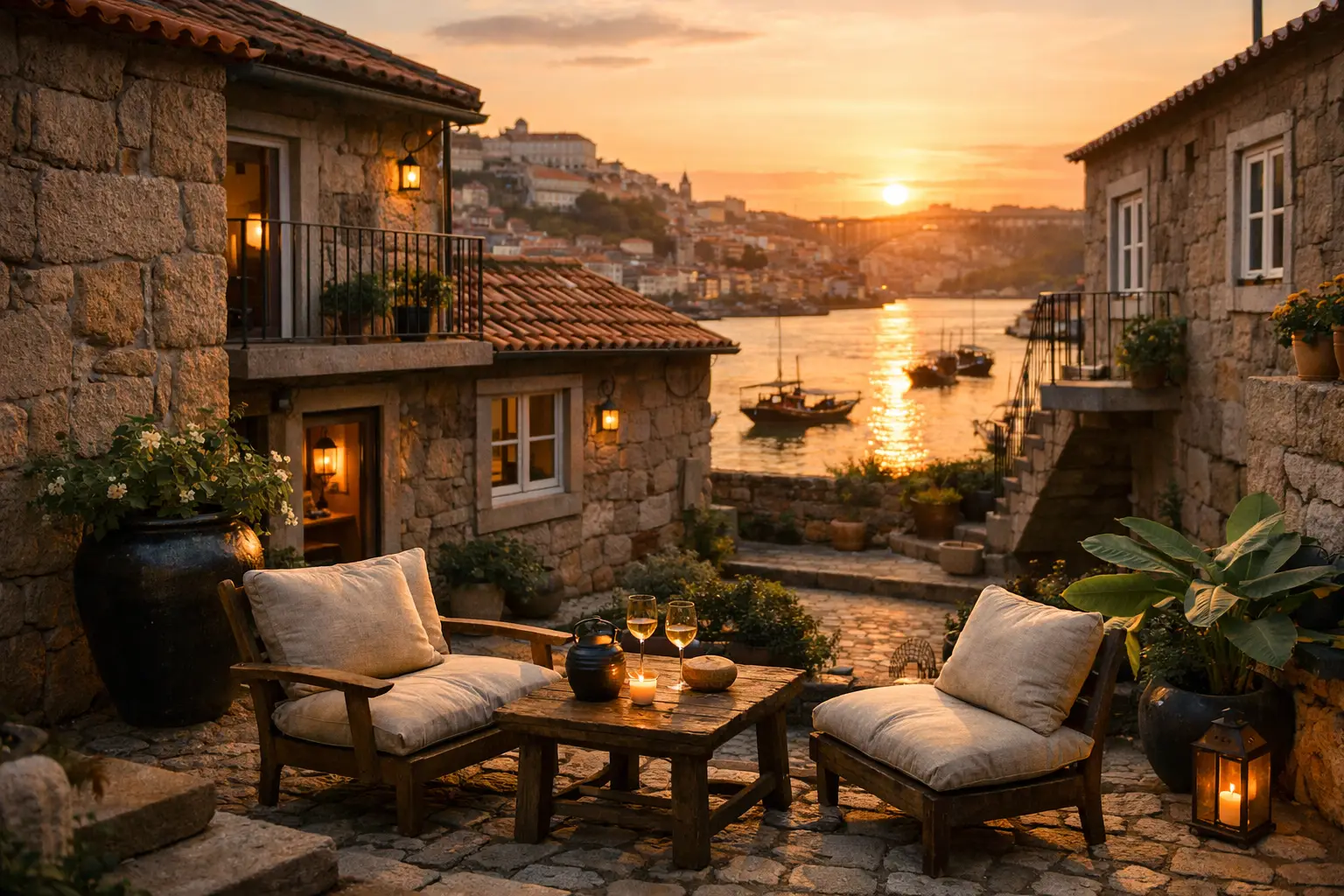
By early evening, Porto starts to soften. Stone facades lose their glare, the river turns from silver to copper, and the whole city seems to exhale at once. If you are hoping for a true sunset Porto Douro experience, timing matters less than people think. What really changes the moment is where you stand, how long you stay, and whether you let the city settle around you.
There is no single perfect sunset point here. That is part of the charm. The Douro bends, the hills interrupt the light, and the bridges frame the sky in ways that can feel dramatic one evening and quiet the next. Porto does not stage sunset for you. You find your angle, wait a little, and notice how the river does the rest.
What makes sunset on the Douro feel different
Some river sunsets are wide open and theatrical. The Douro in Porto is narrower, more built into daily life, and that gives the hour a different mood. You are not looking out at an untouched horizon. You are watching light move across rooftops, church towers, granite walls, moored boats, laundry lines, and upper-floor windows. It feels lived in.
That matters if you are the kind of traveler who prefers texture over spectacle. A sunset here is not only about the sun dropping below the skyline. It is also about the walk there, the sound of plates from a nearby restaurant, the incline in your calves, the brief pause on a stairway when the river opens up between buildings. Porto rewards those slower transitions.
The other thing to know is that the city faces sunset unevenly. Some viewpoints give you a broad western glow. Others catch only the afterlight, which can actually be more beautiful. If you chase the exact solar moment, you may miss the softer colors that arrive ten or fifteen minutes later. In Porto, staying put often beats rushing to a second spot.
Best areas for a sunset Porto Douro view
The riverfront naturally draws people first, and for good reason. Ribeira gives you closeness to the water, movement on the quayside, and the layered silhouette of the opposite bank. It is lively, sometimes crowded, and rarely quiet. If you like your sunset with voices, footsteps, and a bit of city energy, this is a good place to start. If you want calm, it may feel too exposed to passing traffic and too busy in high season.
For a broader view, the upper level around Dom Luís I Bridge gives you height and space. From there, the river looks structural rather than intimate. You see how the city is built by slope and span. The trade-off is that this area can feel more transient. People come, take in the view, and keep moving. It is excellent for perspective, less so for lingering if you want a settled neighborhood rhythm around you.
Jardim do Morro, just across the river, is often mentioned for sunset, and yes, the light can be striking there. But it helps to know what kind of experience you want. On some evenings it feels festive and open. On others it can be too full, especially if you were hoping for a more reflective hour. The view is generous. The atmosphere depends on the crowd.
A better choice for many guests is to look for the in-between places. Miradouros and stepped streets above the river often offer a more balanced mood. You still get the Douro and the changing sky, but with a stronger sense of the city as a neighborhood rather than a backdrop. You will notice older facades catching the last light, people heading home, and small details that disappear in the busier waterfront zones.
From the eastern side of the center, where Bonfim and Campanhã begin to pull away from the postcard angles, sunset can feel more grounded. You are less likely to be shoulder to shoulder with strangers trying to photograph the same frame. Instead, you get streets that are still part of ordinary Porto life, then glimpses of sky and river opening unexpectedly as you walk west. For guests staying at Ruby Charm Houses, that rhythm often feels more natural than making a straight rush to the busiest viewpoint.
When the light is actually best
Summer sunsets come late, and that changes the pace of your evening. The city stays bright for longer than many visitors expect, so there is no need to head out too early and spend an hour waiting in full sun. In July and August, the warmth can still sit heavily on stone and pavement well into the evening. The reward is long golden light, but the trade-off is crowd density and less spontaneity in the most popular spots.
Spring and early fall are often more forgiving. The air is softer, the sky can hold more variation, and the river tends to reflect subtler colors. These are good seasons if you want a sunset walk rather than a sunset event. You can move through the city at a comfortable pace, stop for a drink before the light changes, and still find room to stand without feeling compressed.
Winter is quieter and more unpredictable. Some evenings close in gray and flat. Others surprise you with sharp, clean light and a dramatic wash of pink over the river. The lower sun can make colors feel richer, but the hour passes quickly, and damp air near the water can turn cold fast. If you go out for winter sunset, bring an extra layer and do not expect to improvise too much after dark.
A practical note helps here. Aim to arrive at your chosen spot around 30 to 40 minutes before official sunset. In Porto, the lead-up is part of the pleasure. Then stay at least 20 minutes after the sun slips behind the western ridge. That is when the facades hold a final glow, and the river often looks deepest in color.
How to plan the evening without overplanning it
The nicest sunset Porto Douro evenings usually begin elsewhere. Start with a late walk through Bolhão, Cedofeita, or Bonfim. Have an early dinner reservation or a small glass of something before you head downhill. Let the city carry you toward the river instead of treating sunset like a timed performance.
Footwear matters more than people admit. Porto’s beauty comes with slopes, uneven paving, and staircases that can feel charming at 4 pm and less charming after dark if you are not prepared. Comfortable shoes give you options. You can take a side street, stop at a terrace, or change course when one viewpoint feels too crowded.
It is also worth deciding what kind of sunset you want. If the goal is a photograph, choose height, arrive early, and accept company. If the goal is atmosphere, choose a quieter edge street, a bench above the river, or a lower wall where you can sit and watch the light move. The city offers both. They are not the same experience.
Weather can shift your plans quickly. A thin bank of cloud can mute the direct sunset but improve the afterglow. Wind can sharpen visibility. Haze can flatten distance yet make nearby rooftops look warmer. It depends. In Porto, a so-called imperfect sky can still give you a beautiful evening if you stop expecting a textbook horizon.
Small details that improve the view
Try not to look only at the river. Some of the loveliest moments happen when the last light hits upper windows and painted tiles behind you. Porto asks for a wider gaze.
Keep your phone away for a few minutes at the start. If you photograph immediately, you tend to frame the obvious. If you watch first, you begin to notice the bridge lines, the changing color on the stone, and the way the river darkens at the edges.
And leave room for the walk back. After sunset, Porto does not switch off. The streets glow softly, restaurants fill, and the hills feel slower. Often the return uphill, with the city settling into night, becomes the part you remember most.
A good evening on the Douro is not about collecting the perfect sunset. It is about finding a place where the city feels close, the light lasts a little longer than expected, and you are happy not to hurry away.